Todos los prompts
Vídeo IA
Crea un videoclip contigo mismo usando IA
Solo necesitas un selfie, un prompt para generar la imagen y otro para darle vida.
Cómo se usa
- Sube un selfie donde se vea bien tu cara.
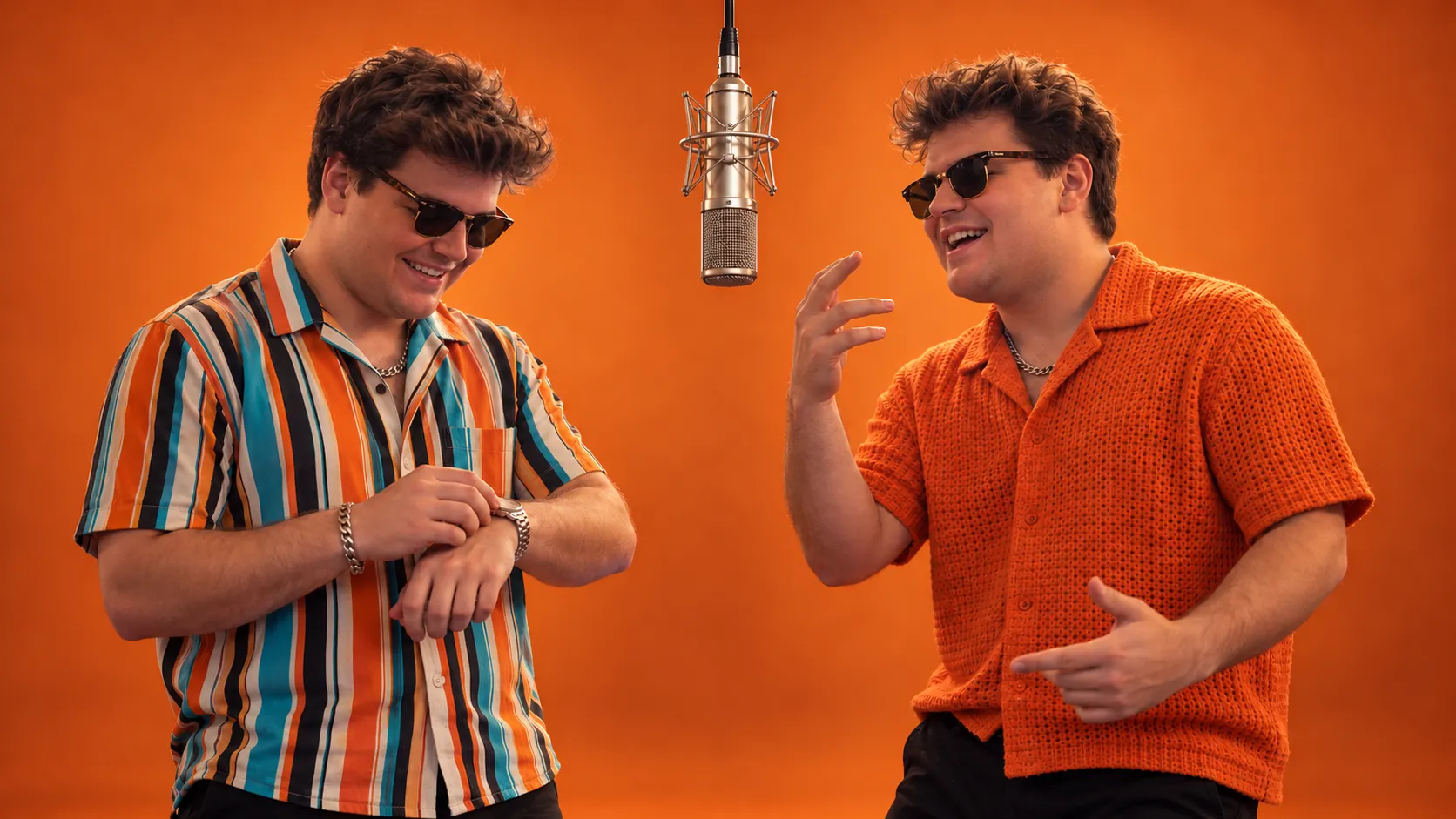
- Genera la escena con dos versiones idénticas de ti (prompt 1).
- Convierte esa imagen en un vídeo musical (prompt 2).
- Añade movimiento, interpretación y audio con un modelo de vídeo.
Prompt 1 en ChatGPT o Nano Banana con tu selfie. Prompt 2 en tu generador de vídeo favorito con la imagen resultante.
La fidelidad de tu cara es lo más importante: elige el resultado que mejor te conserve, aunque la ropa o la pose no sean idénticas al ejemplo.
Prompt 1 · Imagen
Use the uploaded image as the ONLY identity reference for the person. Create a highly photorealistic, premium professional music editorial photograph featuring TWO versions of the exact same person from the uploaded reference image, standing side by side in the same studio scene. IDENTITY PRESERVATION IS THE ABSOLUTE HIGHEST PRIORITY. Both people must clearly and unmistakably be the EXACT SAME REAL PERSON from the uploaded reference image, duplicated naturally into two different poses. Do NOT redesign, reinterpret, beautify, idealize, stylize, age, de-age, or modify the face in any way. Preserve the uploaded person's identity with maximum possible fidelity, including: facial structure, face shape, forehead, eyebrows, eye shape, eye spacing, eye size, eyelids, nose shape, nostrils, cheeks, cheekbones, lips, mouth shape, jawline, chin, ears, skin tone, natural skin texture, hairline, hairstyle, hair texture, facial hair if present, distinctive facial features, visible asymmetries, and overall recognizable proportions. The two generated people must look like two photographs of the SAME PERSON, not two similar-looking people. Do not create an approximate likeness. Do not invent a new face. Do not change ethnicity. Do not change skin tone. Do not make the face more symmetrical. Do not apply beauty filters. Do not smooth away natural facial details. Do not alter the person's apparent age. Do not modify recognizable facial proportions. SCENE AND COMPOSITION: Create a wide horizontal 16:9 professional studio portrait inspired by a high-end contemporary hip-hop, rap and music-industry editorial campaign. Use a completely clean, seamless, saturated burnt-orange studio background. The orange backdrop must fill the entire background and visible floor area, with no visible walls, room corners, furniture, studio equipment, horizon lines or distracting objects. Use a subtle natural studio-light gradient across the orange background, keeping the overall look minimal, clean and premium. Place the two duplicated versions of the uploaded person near the center of the frame, one on the left and one on the right, with generous negative space around them. The composition should feel spacious, balanced, polished, editorial and expensive. LEFT DUPLICATE: Place the first version of the person on the left side of the image. Show them standing naturally, approximately from the knees or upper thighs upward. Angle the torso slightly toward the center. The head should be slightly lowered. The gaze should be directed downward toward the hands, wrist or jewellery. The pose should feel candid, calm and natural, as if the artist is preparing before recording. One hand may naturally touch the opposite wrist, bracelet, watch, fingers or jewellery. Avoid stiff or artificial posing. Dress this version in a premium short-sleeved button-up shirt with bold vertical stripes. The striped shirt should feature a tasteful combination of: orange, white, turquoise blue, black, and subtle complementary tones. The shirt should feel fashionable, modern and appropriate for a contemporary recording artist. Add subtle realistic accessories if appropriate, such as: rings, bracelets, watch, necklace, small jewellery. Accessories must never cover or distort important identity features. RIGHT DUPLICATE: Place the second identical version of the same person on the right side. Angle the body slightly toward the center and toward the microphone. This version should be actively singing or performing. The mouth should be naturally open as if singing a vocal line. The expression should feel confident, authentic, energetic and engaged. Raise one hand naturally near the mouth, chin, cheek or microphone area, as if emphasizing a lyric while performing. The other arm should remain natural and relaxed. Dress this version in a premium bright-orange short-sleeved textured, knitted or perforated shirt. Pair it with dark trousers. The orange shirt should visually harmonize with the orange background but remain clearly separated through lighting, texture and shadows. Tasteful accessories such as rings, bracelets, a watch or necklace may be included. Optional sunglasses may be used only if they do NOT reduce facial recognizability. If sunglasses would hide important facial identity, do NOT use them. MICROPHONE: Place one large vintage-style professional studio condenser microphone hanging vertically from the top-center of the frame. The microphone must hang between and slightly above the two duplicated versions of the person. It should look like a premium classic recording microphone with: metallic silver finish, subtle warm metallic details, realistic microphone grille, professional studio construction, realistic materials and reflections. The microphone should be suspended from a thin cable extending naturally beyond the top edge of the frame. It must be visually important but must NOT cover either person's face. The placement should make it feel as though both versions of the artist are performing around the same microphone. LIGHTING: Use high-end professional studio photography lighting. Use a soft but directional key light from the front and slightly above. Add subtle fill light to preserve detail in shadows. Create controlled highlights on: skin, hair, jewellery, clothing, and the microphone. Use realistic soft shadows and excellent subject separation from the orange background. Keep skin tones completely natural. Avoid excessive contrast. Avoid dramatic cinematic darkness. Avoid HDR-style processing. Avoid unnatural glow. Avoid plastic-looking skin. Avoid excessive saturation. The lighting should feel like a real commercial studio photoshoot for a major recording artist. PHOTOGRAPHIC STYLE: Ultra-photorealistic professional photography. Premium contemporary music editorial campaign. High-end hip-hop / rap artist portrait photography. Realistic skin pores. Realistic skin texture. Realistic hair strands. Realistic facial detail. Accurate anatomy. Accurate hands and fingers. Natural body proportions. Realistic clothing textures. Realistic fabric folds. Realistic jewellery reflections. Natural perspective. Subtle depth of field. Both duplicated faces and the microphone must remain sharp enough to clearly recognize the person's identity. Simulate the appearance of a professional full-frame camera. Approximately 50mm to 70mm portrait lens aesthetic. Eye-level camera angle. Natural perspective compression. Professional commercial photography. High dynamic range while remaining natural. Very high resolution. Crisp facial details. No artificial AI look. The finished result must look like a real photograph taken during an expensive professional music studio photoshoot. DUPLICATION REQUIREMENT: The person on the left and the person on the right are NOT two different people. They are TWO PERFECT DUPLICATES OF THE EXACT SAME PERSON from the uploaded image. Both must preserve the exact same identity. Their: face, facial proportions, skin tone, hair, recognizable characteristics, body appearance, and distinctive features must match the uploaded reference and must also match each other. Only the following should differ: pose, expression, clothing, hand position, body orientation. Do not create subtle differences in facial identity between the two duplicates. Do not make one version look older, younger, slimmer, heavier, more attractive or structurally different from the other. If the uploaded reference image is only a close-up selfie, naturally reconstruct the body while keeping all visible identity characteristics completely faithful to the uploaded person. Do not alter the person's face to make it fit the scene. The scene must adapt to the person's identity, never the opposite. CRITICAL FACE FIDELITY CHECK: Before producing the final result, internally compare BOTH generated faces against the uploaded reference image. If either generated face does not strongly preserve the original person's identity, facial geometry, proportions and recognizable characteristics, correct it before finalizing. If the two generated versions do not look unmistakably like the exact same person, correct them before finalizing. Facial fidelity is more important than: clothing, accessories, pose, background styling, artistic interpretation, or composition. FINAL OUTPUT REQUIREMENTS: 16:9 horizontal composition. Exactly TWO duplicated versions of the uploaded person. One duplicate on the left. One duplicate on the right. Same exact identity on both sides. Left duplicate looking downward toward their hands or wrist. Left duplicate wearing a bold multicolored vertically striped shirt. Right duplicate actively singing. Right duplicate wearing a bright-orange textured shirt. One large hanging vintage studio microphone centered above and between them. Seamless burnt-orange studio background. Premium professional music editorial aesthetic. Maximum photorealism. Maximum facial identity preservation. Realistic anatomy. Realistic hands. Natural skin texture. No text. No logos. No watermark. No additional people. No extra faces. No duplicated limbs. No malformed fingers. No facial distortion. No identity drift. No cartoon style. No illustration. No CGI appearance. No artificial-looking skin. The final image must immediately look like a genuine professional photograph of the exact person from the uploaded image appearing twice in the same premium music studio photoshoot.
Prompt 2 · Vídeo
Create a 10-second photorealistic live rap performance featuring the two men in the reference image. They are two duplicated versions of the exact same person, and their facial identity, hairstyle, body proportions, skin tone, clothing, accessories and overall appearance must remain 100% consistent with the input image throughout the entire shot.

Identity preservation is the highest priority. Do not reinterpret, beautify, reshape, age, stylize or modify either face or body at any moment. No facial morphing, no identity drift, no changing hairstyles, no changing clothes, no distorted hands or anatomy.

The performance should feel like a real professional hip-hop studio session, not a meme, parody or exaggerated AI animation.

Performance choreography

0–3 seconds:
The man on the left naturally starts performing a short rap verse into the hanging microphone. His lip movement is realistic and synchronized with the vocal performance. He subtly moves his shoulders and upper body to the beat and uses small, confident hand gestures.

The man on the right naturally feels the rhythm, slightly bouncing with his knees and shoulders, making restrained hand gestures while watching and reacting to the performer.

3–7 seconds:
Both continue moving naturally to the beat.
The left performer remains focused on the microphone, with realistic rap delivery, subtle head movement and controlled hand gestures.

The right performer briefly turns his torso into a three-quarter angle, slightly showing his side/back while continuing to move with the rhythm, then naturally begins turning back toward the microphone and camera.

Their movements should feel spontaneous and musically motivated, like two real artists performing together.

7–10 seconds:
The energy increases slightly but remains controlled. Both performers interact subtly with each other and the beat. The left performer finishes the phrase with a confident natural gesture while the right performer reacts naturally and settles back into the rhythm.

End on a strong, believable performance moment suitable for a seamless social-media clip.

Audio

Include an original modern hip-hop / trap instrumental with a polished studio sound, strong but tasteful bass and a confident rhythmic groove.

The left performer delivers a short, natural-sounding rap vocal that matches the beat. Keep the vocal delivery cool, controlled and believable rather than aggressive, comedic or exaggerated.

Camera and realism

Keep the camera almost completely static, like a professionally filmed studio performance. Only allow extremely subtle natural camera presence if necessary. No dramatic zooms, orbiting camera, shaking or artificial cinematic movements.

Preserve the orange studio background and hanging silver microphone exactly as established in the reference image.

The microphone should remain physically stable and believable.

Maintain realistic:

body weight shifts
breathing
shoulder movement
hand gestures
facial expressions
eye direction
lip synchronization
fabric movement

Movements must be subtle, smooth and anatomically realistic.

Absolutely avoid

exaggerated dancing
meme-like gestures
cartoonish expressions
excessive arm waving
unnatural head movement
impossible body movement
sudden pose changes
facial distortion
facial identity drift
changing facial features
changing body proportions
duplicated or malformed fingers
clothing changes
background changes
camera cuts
scene transitions
unnecessary visual effects

The final result should look like real footage of the same person performing twice in a professional rap studio session. The viewer's first reaction should be that the performance looks surprisingly real and polished, not obviously AI-generated.